What is TG20?
TG20 is one of those terms you hear constantly around scaffolding sites, quotations and handovers — but rarely see properly explained. It is not simply a certificate, and it is not a blanket approval that makes every scaffold safe. Here is what TG20 actually means, how TG20:21 works and when a scaffold needs to leave the standard route and go to a designer.
Imagine every ordinary two-storey access scaffold had to be sent to a structural designer before a tube could be erected. Domestic scaffolding would become slower, more expensive and unnecessarily complicated. TG20 helps avoid that by defining proven configurations that competent scaffolders can work within.
But that only works while the scaffold stays inside the parameters of the guidance.
Once the structure becomes unusual, heavily loaded, particularly tall, extensively sheeted, cantilevered or otherwise outside the permitted configuration, the answer cannot simply be: “It's TG20.”
TG20 is best thought of as a recognised route to a standard scaffold configuration — not a substitute for engineering when the scaffold falls outside that route.
What does TG20 actually refer to?
TG20 is NASC technical guidance covering good practice for tube-and-fitting scaffolding.
The current edition is commonly referred to as TG20:21. It was developed around the requirements of BS EN 12811 and gives the scaffolding industry a practical way of applying recognised scaffold configurations on real sites.
HSE recognises TG20 as an example of a generally recognised standard configuration for tube-and-fitting scaffolds.
That distinction matters because the Work at Height Regulations require a scaffold either to follow a recognised standard configuration or to have its strength and stability demonstrated through a suitable bespoke design.
TG20 is guidance. It is not the legislation itself.
This is probably the most useful distinction to understand.
Work at Height Regulations
These create legal duties around work at height, planning, competence, suitable equipment and safe working.
TG20
Provides recognised standard configurations and technical guidance that can be used to demonstrate an appropriate approach for many tube-and-fitting scaffolds.
So describing a scaffold as “TG20 compliant” does not mean that TG20 itself is an Act of Parliament or a separate piece of legislation. It means the scaffold has been planned within a recognised technical framework used by the UK scaffolding industry.
How does TG20 work on an actual job?
Before scaffolders arrive and start putting tubes together, the structure should already have been considered in terms of its location, intended use, height, length, loading and the conditions around the site.
For a scaffold that may fit within TG20, a competent user can enter the relevant details into the NASC TG20 eGuide.
1. Describe the scaffold
The user enters relevant details such as scaffold type, dimensions and configuration.
2. Identify the location
Location matters because wind exposure forms part of the assessment.
3. Add relevant scaffold details
The proposed arrangement is checked against the configurations covered by TG20.
4. The eGuide checks the proposal
If the proposed scaffold falls within the relevant parameters, a compliance sheet can be produced.
5. Or it stops being a standard solution
If the proposed structure falls outside the permitted configuration, a bespoke scaffold design may be required.
What is a TG20 compliance sheet?
This is where TG20 becomes something tangible on site.
A TG20 compliance sheet is a document generated through the NASC eGuide for a scaffold that falls within the relevant standard configuration. NASC describes the compliance sheet as a two-page document summarising the dimensions and criteria of the scaffold.
It is intended to show the contractor, client and site team what configuration the scaffold is expected to follow.
One important point: the existence of a compliance sheet does not remove the need for competent erection, suitable foundations, correct ties, proper inspection or safe use.
A piece of paper cannot make a badly erected scaffold compliant.
A simple example makes TG20 easier to understand
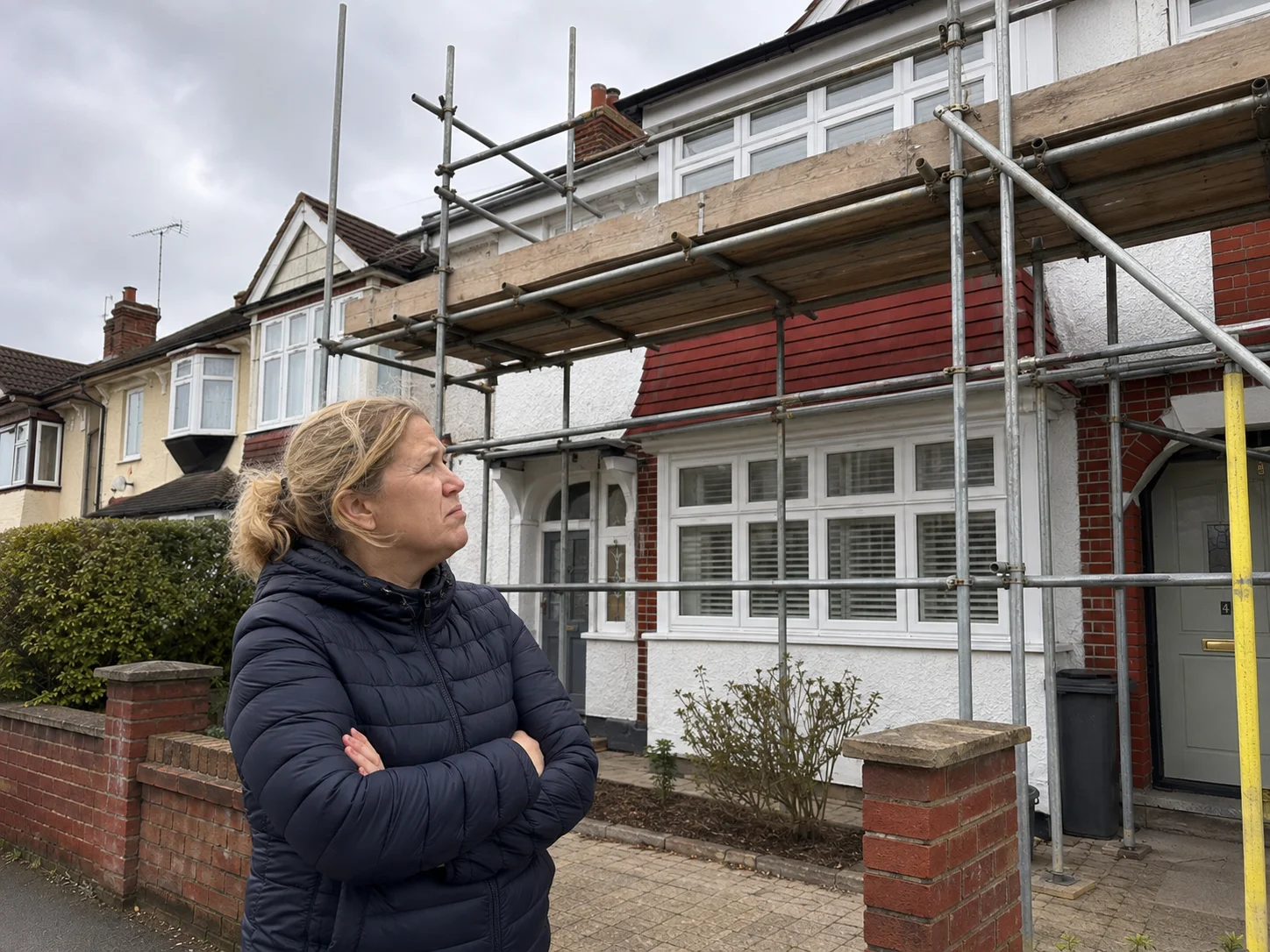
Two-storey house requiring roof access
A scaffolder is asked to provide a conventional tube-and-fitting access scaffold to the front of a typical two-storey property for roofing work.
There are no unusual projections, heavy loads, temporary roofs or particularly complex structural requirements.
Complex scaffold around an unusual building
Now imagine the scaffold has to cantilever over part of a building, bridge a large opening, support unusual loads and incorporate a complex temporary roof.
The contractor cannot simply assume the ordinary standard configuration still applies.
When does a scaffold need a bespoke design?
HSE makes the underlying rule fairly clear: where the scaffold does not fall within a recognised standard configuration, its strength, rigidity and stability need to be established by suitable design and calculation.
Structures that commonly require specific design can include more unusual arrangements such as:
- Temporary roofs and temporary buildings
- Shoring scaffolds
- Complex loading bays
- Pavement gantries
- Slung or suspended scaffolds
- Complex cantilever arrangements
- Façade retention
- Support scaffolds
- Unusual bridges and walkways
- Scaffolding supporting significant additional loads
- Structures outside TG20's compliant criteria
There is an important nuance here: TG20:21 itself covers a limited range of some features such as loading bays, towers, bridges, rakers, protection fans and certain cantilever arrangements. So the presence of one of these features does not automatically mean the whole scaffold needs bespoke engineering.
What matters is whether the actual configuration falls within the recognised TG20 criteria.
TG20 compliance sheet vs scaffold design
These are related, but they are not the same document.
TG20 compliance sheet
Used where the scaffold fits within a recognised TG20 standard configuration.
Bespoke scaffold design
Produced where the structure falls outside the relevant recognised configuration and needs specific engineering consideration and calculation.
In other words, the compliance sheet demonstrates: “this scaffold fits an established solution.”
A bespoke design deals with: “this scaffold needs its own engineered solution.”
What is the difference between TG20 and TG30?
This distinction is becoming increasingly useful because not every scaffold in the UK is traditional tube-and-fitting.
| TG20 | TG30 | |
|---|---|---|
| Primary focus | Tube-and-fitting scaffolding | System scaffolding |
| Produced by | NASC | NASC in collaboration with system manufacturers and suppliers |
| Purpose | Provides recognised standard configurations for appropriate tube-and-fitting scaffolds | Provides recognised configurations for supported system scaffold arrangements |
| Digital route | TG20 eGuide | TG30 eGuide |
So if somebody describes every scaffold as needing “TG20”, that is an oversimplification. TG20 specifically relates to tube-and-fitting scaffolding, while NASC now has TG30 covering supported system scaffolding configurations.
What information does a scaffolder need before deciding the route?
A proper scaffold cannot be planned from the words “two-storey house, front elevation” alone.
HSE identifies information such as the following as relevant during the planning and design process:
- Site location
- How long the scaffold will remain in place
- What the scaffold will be used for
- Height and length
- Critical building dimensions
- Number of boarded lifts
- Maximum working loads
- How many people may use it at one time
- Loading bays, bridges, fans or other additional elements
- Relevant drawings
- Other site-specific information affecting the structure
This is one of the reasons a good scaffolding quote should describe the actual scope, rather than consist of a price and little else.
Why are ties so important to TG20?
When people look at scaffolding, they tend to notice the tubes, platforms and guard rails.
One of the less obvious parts is often one of the most important: how the scaffold is restrained.
A scaffold standing against a building is exposed to forces including wind. Ties connect the scaffold appropriately to the supporting structure and form a critical part of many scaffold configurations.
TG20 guidance deals with matters including tie arrangements and loading because changing those arrangements can fundamentally change how the scaffold behaves.
This is also why removing a tie because it is inconvenient for a roofer, window fitter or bricklayer is not a trivial alteration.
Never casually alter a scaffold. Changes that take a structure outside its recognised configuration may require additional assessment or design. Scaffold alterations should be carried out by competent scaffolders.
Who can produce a TG20 compliance sheet?
Access to software is not the same thing as competence.
NASC makes its eGuide available to the wider scaffolding industry, not only NASC member companies. NASC specifically notes that the production of a compliance sheet does not, by itself, mean that the company producing it is an NASC member.
The compliance sheet should be produced by someone competent to understand the scaffold, the information being entered and the limitations of the resulting configuration.
What a TG20 compliance sheet does not prove
This is an area where clients can put too much faith in the document.
A compliance sheet does not independently prove that:
- The scaffold has been erected correctly
- Every tie is physically installed as required
- The foundations are suitable
- The scaffold has not subsequently been altered
- The contractor has appropriate competence
- Required inspections have been completed
- The scaffold remains safe after damage or severe weather
- The scaffold is being used within its intended loading
Think of the compliance sheet as part of the scaffold's technical record — not as a magic certificate that overrides everything that happens on site.
Does a TG20 scaffold still need inspecting?
Yes.
TG20 compliance and scaffold inspection deal with different things.
HSE guidance states that construction scaffolds should be inspected by a competent person before first use and then at intervals not exceeding seven days. Additional inspections are required following circumstances that may affect safety, such as substantial alterations, damage or extreme weather.
So a scaffold can have a perfectly valid TG20 compliance sheet and still require its normal inspection regime.
Should a homeowner ask about TG20?
You do not need to become a scaffold designer just because you are having your roof replaced.
But asking a few sensible questions can tell you a lot about how professionally the job is being handled.
- Is the scaffold being erected to a recognised standard configuration?
- Will there be a TG20 compliance sheet for this scaffold?
- If it does not fit TG20, is a bespoke scaffold design required?
- Who is responsible for scaffold inspections?
- Will I receive the relevant handover or inspection information?
- Is the scaffolder suitably competent and insured for the work?
What this should look like on a well-run job
Say you are replacing the roof on a semi-detached house.
The roofing contractor confirms that they require front, rear and gable access with suitable working platforms and edge protection.
The scaffolder assesses the property, access, dimensions and intended use. The proposed arrangement falls within an appropriate TG20 configuration.
A compliance sheet is generated for that configuration. The scaffold is then erected by competent operatives to the required arrangement, handed over appropriately and inspected as required throughout the project.
Halfway through the job the roofer decides they would like an additional loading area.
The correct response is not simply to throw some more boards and tubes onto the structure.
The change should be considered against the scaffold's existing configuration. If the alteration remains within an appropriate standard solution it can be dealt with accordingly. If it pushes the scaffold outside those parameters, further design consideration may be required.
That is TG20 in the real world: not merely paperwork, but a framework controlling what the scaffold is intended to be.
Need scaffolding for your project?
Tell us what work you are carrying out and compare quotes from scaffolders covering your postcode.
Frequently asked questions about TG20
What is TG20 in scaffolding?
TG20 is technical guidance produced by the National Access & Scaffolding Confederation for tube-and-fitting scaffolding. It provides recognised standard configurations that many common scaffolds can be erected within without requiring an individual bespoke structural design.
What is TG20:21?
TG20:21 is the current edition of NASC's TG20 guidance for tube-and-fitting scaffolding. It is supported by the TG20 eGuide, Operational Guide and Design Guide.
Is TG20 a legal requirement?
TG20 is industry technical guidance rather than legislation itself. However, HSE recognises TG20 as a generally recognised standard configuration for tube-and-fitting scaffolds. Where a scaffold does not follow a recognised standard configuration, suitable bespoke design and calculation may be required.
Does every scaffold need a TG20 compliance sheet?
Not every scaffold follows the TG20 route. TG20 relates to appropriate tube-and-fitting scaffold configurations. Structures outside the relevant recognised configuration require suitable bespoke design, while system scaffolds may instead follow manufacturers' guidance or relevant TG30 configurations.
What is on a TG20 compliance sheet?
A TG20 compliance sheet summarises the scaffold configuration and relevant criteria. NASC describes it as a two-page document containing features such as a representative scaffold illustration, compliance criteria, permitted additional features and a sign-off section.
What happens if a scaffold does not comply with TG20?
If the proposed scaffold falls outside the relevant recognised TG20 configuration, it should not simply be treated as a standard scaffold. A suitable bespoke design produced by a competent person may be required to demonstrate adequate strength, rigidity and stability.
What is the difference between TG20 and TG30?
TG20 covers recognised configurations for tube-and-fitting scaffolding. TG30 was introduced by NASC for supported system scaffolding configurations, working with system manufacturers and suppliers.
Does TG20 replace scaffold inspections?
No. A TG20 compliance sheet relates to the scaffold configuration. Required scaffold inspections remain a separate responsibility and must still be completed by a competent person at the appropriate times.
HSE — Scaffold design and scaffolding information · NASC — TG20, TG30 and compliance sheet guidance
Information is intended as a general explanation and should not replace project-specific advice, scaffold design, manufacturer guidance or the judgement of a competent scaffolding professional.