What Are Scaffold Boards Made From?
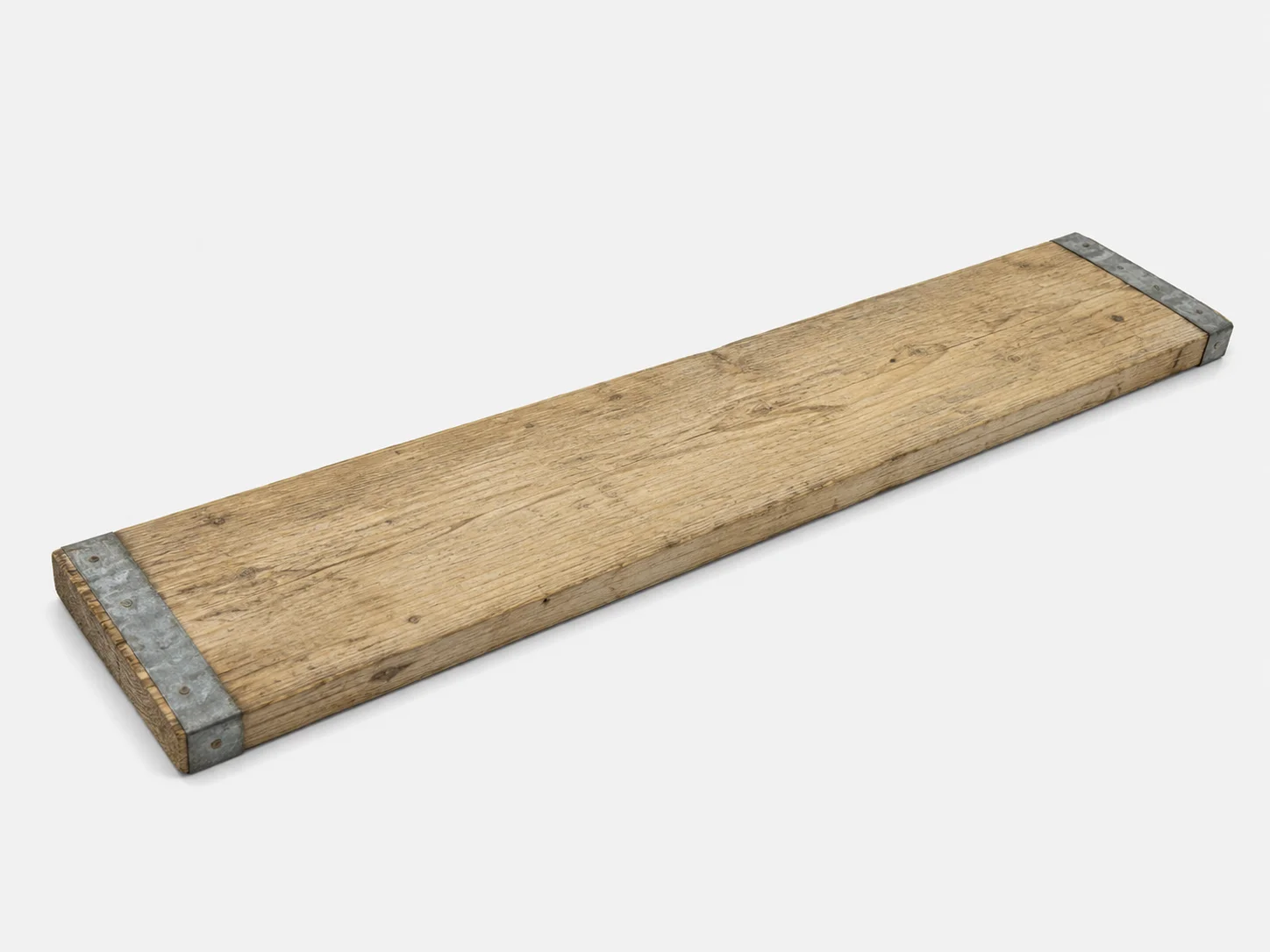
The traditional scaffold board looks deceptively simple: a long piece of timber with metal bands around each end. But a board intended to carry people, tools and materials several metres above the ground is very different from an ordinary plank bought from a timber merchant.
But the important thing is not simply the species of tree. A proper scaffold board intended for use as a working platform needs predictable structural performance. In the UK, timber scaffold boards are commonly manufactured and graded to BS 2482:2009.
That means there is a significant difference between “a piece of wood that happens to be 225mm wide” and a timber board that has been selected, graded, marked and manufactured for use on scaffolding.
European whitewood
UK scaffold-board manufacturers commonly use European whitewood, particularly spruce, because suitable material can provide the combination of strength, stiffness, availability and workability needed for scaffold platforms.
Why is timber still used for scaffold boards?
Scaffolding has changed considerably over the years. Modern sites now use proprietary system scaffolds, aluminium access equipment, steel decks and specialist components.
Yet the timber scaffold board remains instantly recognisable.
There are good reasons for that.
It provides a practical working surface
A row of properly supported boards creates a continuous platform for scaffold users to stand and move along while carrying out work.
Timber has useful structural properties
Correctly selected and graded structural timber can combine stiffness with a degree of flexibility rather than behaving like a brittle material.
Boards can be handled relatively easily
Scaffolders need to move large quantities of decking around a site. Timber provides a practical balance between structural performance and manual handling.
They can be produced in useful standard lengths
Scaffold boards are available in a range of lengths, allowing working platforms to be configured for different bay sizes and structures.
A scaffold board is not considered suitable simply because it looks like a strong plank.
What is BS 2482:2009?
BS 2482:2009 is the current British Standard specification covering timber scaffold boards.
It deals with matters including:
- board dimensions;
- timber quality;
- strength grading;
- construction;
- factory production control;
- marking; and
- permitted support spans.
BSI currently lists BS 2482:2009 as a current standard, although it is under review.
NASC also continues to publish current guidance for selecting, using and maintaining timber scaffold boards in accordance with BS 2482:2009.
How big is a standard scaffold board?
The traditional board most people recognise is nominally 225mm wide and 38mm thick.
You will often hear scaffolders refer to a full-length board as a 13-foot board, which is approximately 3.9 metres long.
Shorter lengths are also commonly supplied.
| Common description | Approximate metric length | Typical use |
|---|---|---|
| 13 ft | 3.9 m | Full-length traditional scaffold board |
| 10 ft | 3.0 m | Shorter platform arrangements |
| 8 ft | 2.4 m | Platforms and shorter bays |
| 6 ft | 1.8 m | Short access and infill arrangements |
| 5 ft | 1.5 m | Shorter scaffold configurations |
| 4 ft | 1.2 m | Localised or short-platform use |
BS 2482 also covers a thicker 63mm × 225mm timber scaffold board, though the familiar 38mm board is far more recognisable on general UK scaffolding sites.
What does “graded scaffold board” actually mean?
Timber is a natural material.
Unlike a manufactured steel section, two pieces of timber cut to exactly the same dimensions can contain different knots, grain patterns, splits and other characteristics.
That is why scaffold-board grading matters.
BS 2482:2009 provides both visual and machine grading routes for certain board grades.
Visually graded
A trained grader assesses relevant characteristics in the timber against the grading rules.
Machine graded
The timber passes through strength-grading equipment that assesses its mechanical characteristics against specified settings.
Known board grade
The finished board can then be marked for its applicable support-span grade and standard.
Why does the support span matter?
A board is not infinitely strong simply because it complies with the standard.
Its permitted performance depends on how it is supported.
For 38mm × 225mm boards, BS 2482:2009 includes:
- a board grade suitable for support centres up to 1.2 metres; and
- a machine-graded board suitable for support centres up to 1.5 metres.
The standard also covers 63mm × 225mm boards suitable for support centres up to 2.5 metres.
This is why board markings matter: you cannot simply look at a scaffold board and assume how far it is permitted to span between supports.
Why do scaffold boards have metal bands on the ends?
Those familiar metal bands are not decorative.
The ends of timber boards are particularly vulnerable to damage during handling, loading, unloading and repeated site use.
End protection helps control splitting and protects the vulnerable board ends.
BS 2482 allows specified forms of end protection including end hoops and nail plates.
What should be marked on a scaffold board?
The marking on the edge of a board is there for a reason.
A properly marked BS 2482 board can provide information including:
- the BS 2482 standard reference;
- manufacturer or supplier identification;
- whether the board is machine or visually graded;
- its permitted support span; and
- relevant third-party certification identification where applicable.
For a scaffolder inspecting a stack of boards in a yard, that information is much more useful than relying on appearance alone.
Why can't you just use an ordinary plank of timber?
Because ordinary construction timber has not necessarily been graded, manufactured or marked for use as scaffold decking.
Two pieces of timber might have similar dimensions while having very different structural properties.
NASC guidance describes a BS 2482 board as a product of known quality and performance and advises against substituting non-BS 2482 boards where proper timber scaffold boards are required.
At ground level, using the wrong plank might result in a broken shelf. On scaffolding, a board failure could create a fall from height.
What defects can make a timber scaffold board unsafe?
Boards live a hard life.
They are carried, dropped, loaded, exposed to rain, plaster, mortar, paint and repeated site handling.
That means suitability does not end on the day the board leaves the manufacturer.
Boards should be inspected and removed from service where deterioration or damage makes them unsafe.
Things that may require attention include:
- serious splits;
- damage to the board ends;
- loose or missing end bands;
- significant decay;
- physical impact damage;
- deep cuts or notches;
- chemical contamination;
- burning or excessive heat damage; and
- anything else that could materially reduce strength or create unsafe footing.
Does rain ruin scaffold boards?
Scaffold boards are used outdoors, so exposure to changing weather is expected.
That does not mean timber boards can simply be stored badly or ignored indefinitely.
NASC guidance covers the care, storage, inspection and maintenance of timber boards because repeated wetting, poor storage and physical damage can affect their condition over time.
Good yard management matters just as much as buying the correct board in the first place.
Are all scaffold platforms made from timber?
No.
This is where the terminology becomes slightly confusing.
Traditional tube-and-fitting scaffolding is strongly associated with timber boards, but modern proprietary system scaffolds may use purpose- made decking or battens manufactured from other materials.
Timber boards
Familiar BS 2482 scaffold boards used widely with tube-and-fitting scaffolding.
Steel decks
Proprietary steel platform units can form part of a complete system scaffold and are used to the manufacturer's specification.
Aluminium / composite
Other proprietary platform materials exist for particular access systems and applications, but they should be used according to the relevant manufacturer's instructions.
The key point is that these should not be treated as interchangeable pieces of decking.
A proprietary steel or aluminium deck forms part of a defined access system with its own dimensions, support arrangements and loading requirements.
Is BS 2482:2009 still current?
Yes.
As of August 2026, the British Standards Institution lists BS 2482:2009 — Specification for timber scaffold boards as current, although the standard is currently under review.
That is worth mentioning because the number “2009” can make people assume the standard must have been replaced years ago.
It has not currently been withdrawn.
What about old scaffold boards sold for furniture and gardens?
Reclaimed scaffold boards have become extremely popular for:
- tables;
- shelving;
- garden furniture;
- raised beds;
- work benches; and
- interior features.
But there is an important distinction between:
“This used to be a scaffold board”
and:
“This board is currently fit for structural use as scaffold decking.”
A board that has been retired from scaffolding because of damage or condition may still be perfectly attractive as rustic furniture, but that does not mean it should go back onto a working scaffold.
The scaffold board is only one part of a safe platform
Even a correctly graded board can be unsafe if it is installed incorrectly.
Working platforms depend on matters such as:
- correct transom or bearer spacing;
- appropriate board overhang;
- boards being properly supported;
- avoiding trap ends;
- suitable platform width;
- guard rails and toe boards where required;
- correct loading; and
- ongoing scaffold inspection.
NASC fall-prevention guidance specifically warns that exceeding the permitted support span increases the risk of a board failing.
Need scaffolding rather than scaffold boards?
For most homeowners and contractors, buying the boards themselves is not the answer. What matters is getting a complete scaffold that has been properly specified, erected and inspected for the work being carried out.
You can find scaffolders covering your area on Scaffolder Near Me or post your requirements once and let local scaffolding companies respond.
Need a properly specified scaffold?
Enter your postcode, describe the work and receive quotes from scaffolding companies covering your area.
Scaffold board FAQs
What wood are scaffold boards made from?
Traditional UK timber scaffold boards are commonly manufactured from European whitewood, particularly spruce. The timber used for scaffold platforms must have suitable structural characteristics and should be appropriately graded for its intended use.
Are scaffold boards just normal timber?
No. Timber scaffold boards intended to comply with BS 2482:2009 are manufactured, graded and marked to defined requirements. An ordinary plank of a similar size is not automatically suitable for use as scaffold decking.
What size is a standard scaffold board?
The most familiar traditional scaffold board is nominally 225mm wide and 38mm thick. Full-length boards are commonly around 3.9 metres or 13 feet long, with shorter lengths also widely available.
Why do scaffold boards have metal ends?
Metal end bands or approved nail-plate arrangements help protect the ends of timber scaffold boards from damage and splitting during repeated handling and use.
What does BS 2482 mean on a scaffold board?
BS 2482:2009 is the current British Standard specification for timber scaffold boards. It covers requirements including timber quality, dimensions, grading, construction, marking and support spans.
What is the difference between 1.2m and 1.5m scaffold boards?
The figure refers to the board's applicable maximum support centre. Under BS 2482:2009, 38mm boards can be graded for support centres up to 1.2m, while the 1.5m grade is machine graded.
Are scaffold boards treated with chemicals?
Not necessarily. Many standard scaffold boards are supplied untreated, although specialist treatments such as fire-retardant treatments are available for particular applications. The specification of the actual board being supplied should be checked rather than assumed.
Can damaged scaffold boards still be used?
A scaffold board should not remain in service where damage, deterioration or defects make it unsafe. Boards require ongoing inspection and maintenance, and unsuitable boards should be removed from scaffold use.
Are steel scaffold boards available?
Yes. Modern proprietary system scaffolds can use steel or other purpose-made decking systems. These are different from traditional BS 2482 timber boards and should be installed and used in accordance with the relevant system manufacturer's instructions.
Scaffold components should always be selected, inspected and used by competent people in accordance with the relevant scaffold configuration, technical guidance and manufacturer's instructions.